
What Is the Trip to Hawaii Cost for Your Budget?
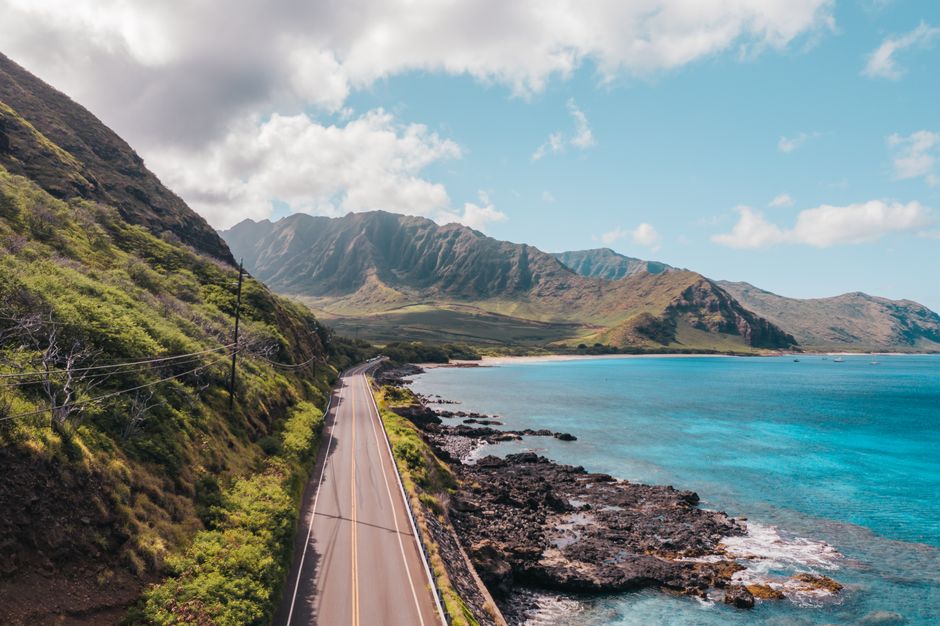
A realistic trip to Hawaii cost depends most on airfare, lodging, island, and trip length. For a seven-night shoulder-season trip, NerdWallet’s examples for two travelers range from $4,936 for a lower-cost condo plan to $9,574 for a beachfront resort plan. Hawaii’s official 2024 average was $245 per visitor per day, a useful benchmark—not a guaranteed quote—before you tailor the estimate to your flights and plans.
How much should two people budget for a week in Hawaii, including flights?
For two people, use $4,936 to $9,574 as an illustrative seven-night shoulder-season range before treating it as a live quote; airfare is part of the examples, but their meal, car, parking, and resort-fee assumptions differ. NerdWallet places a three-star hotel plan between those bookends at $6,488. These totals are useful starting points, not fixed prices for every island or departure city.
For a consistent daily cross-check, the Hawaiʻi Department of Business, Economic Development & Tourism (DBEDT) reports that visitors arriving by air spent an average of $245 per person per day in 2024 and stayed 8.78 days. At that daily average, two travelers spending seven days would account for $3,430 in on-island visitor spending; this calculation excludes airfare and is not the same package as NerdWallet’s seven-night examples.
Use the following planning bands as a way to organize choices, not as additional published price quotes:
| Style | Published seven-night example for two | What to check before booking |
|---|---|---|
| Lower-cost | $4,936; lower-cost condo plan | Included flights, kitchen use, meals, and car assumptions |
| Mid-range | $6,488; three-star hotel plan | Room taxes, meals, transport, and any parking charges |
| Luxury | $9,574; four-star beachfront resort plan | Resort fees, parking, dining, and included amenities |
For a family, multiply only the costs that truly scale with each traveler, such as airfare, per-person activities, and some meals. A room or rental unit may house several people at one nightly price, while extra beds, larger vehicles, or additional rooms raise the total. The supplied sources do not provide a family package total, so price those components directly rather than extrapolating a couple’s total across every category.
What does a trip to Hawaii cost per person for seven days?
Using DBEDT’s 2024 average daily visitor spending, seven days comes to about $1,715 per person on-island, before airfare. This is the cleanest official starting benchmark for a week: multiply it by the number of travelers, then add each traveler’s flight and adjust the lodging and transport components to match the itinerary.
The $1,715 estimate is an average, not a bill or a recommended minimum. DBEDT’s annual report records $245 in average daily spending per visitor by air; its categories include lodging, food and beverage, entertainment and recreation, and transportation. Across the full year, lodging represented $9.54 billion of visitor spending, food and beverage $4.37 billion, entertainment and recreation $1.95 billion, and transportation $1.92 billion.
Build a practical worksheet with one line for each cost so a price change has a clear place to land:
- Airfare: price round trips for every traveler from the actual departure airport, travel dates, and baggage plan.
- Lodging: multiply the quoted nightly rate by nights, then add taxes and mandatory charges.
- Meals: estimate restaurant meals separately from groceries; a kitchen changes the mix, not the need to budget for food.
- Ground transport: compare rental, fuel, parking, and other transport costs against the itinerary and island.
- Activities and island hops: list paid activities and any inter-island airfare as separate line items; do not assume they are included in daily averages.
Trip length changes more than the flight line: each additional night adds lodging and likely meals, while fixed airfare is spread across more days. Season also matters. DBEDT’s March 2025 hotel report recorded a statewide hotel average daily rate of $379.15, but that is a single month’s hotel statistic—not a universal rate for other dates, vacation rentals, or every traveler.
Which Hawaiian island is the cheapest to visit, and how much do costs differ?
In DBEDT’s 2024 year-to-date visitor-spending figures, Oʻahu was lower than Hawaiʻi Island on the reported daily total: $222.10 per person versus $239.80. That difference is a useful observed-spending comparison, not a promise that every Oʻahu itinerary will cost less; hotel choices, dates, transport needs, and activities can reverse an individual comparison.
The category breakdown helps explain the gap. Oʻahu recorded $101.50 per person per day for lodging, $48.00 for food and beverage, $22.10 for entertainment and recreation, and $18.40 for transportation. Hawaiʻi Island recorded $108.80 for lodging, $49.50 for food and beverage, $24.80 for entertainment and recreation, and $33.00 for transportation. Its transportation figure is notably higher in this data, including an average $23.80 for rental vehicles, compared with $12.60 on Oʻahu.
Hotel rates tell a related but different story. In March 2025, DBEDT reported hotel average daily rates of $280.95 on Oʻahu, $577.36 in Maui County, $456.81 on Hawaiʻi Island, and $419.35 on Kauaʻi. The report covered 172 properties and 48,160 rooms, and excluded vacation rentals and timeshares. Treat these as a dated hotel snapshot rather than a ranking that applies to all accommodation types or travel dates.
The practical comparison is to price the whole plan, not just the room: choose the same dates and party size, then add lodging taxes, transportation, food, and planned activities for each island. A lower hotel rate can be offset by rental-car dependence or an inter-island flight; a higher lodging quote may fit a plan that needs less driving. The provided data do not give a consistent all-inclusive price for Maui and Kauaʻi, so current quotes are needed to complete that island-by-island comparison.
Frequently Asked Questions
How much should I budget for hotels, food, rental cars, and activities in Hawaii?
Start with Hawaii DBEDT’s 2024 average visitor spending of $245 per person per day, then adapt the lodging, food, transport, and activity shares to your itinerary. For a seven-night trip, multiply the daily benchmark by seven and by the number of travelers, then add airfare if it is not already included in your estimate. Use a current lodging quote and car or activity prices to replace the averages.
What extra taxes, resort fees, parking, and baggage costs should I include?
Hawaiʻi’s TAT is 10.25%, and GET is 4%, plus a 0.5% county surcharge where applicable; mandatory accommodation fees are included in rental proceeds subject to TAT. NerdWallet’s examples show property-specific resort fees of $29.49 to $50 per night and parking of $45 to $68.06 per day, so verify current charges with the property. Add any airline baggage charges from the fare you select; the supplied sources do not provide a general baggage price.
How can I estimate the cost of a Hawaii trip from the mainland East Coast versus the West Coast?
Build the same itinerary for both origins and compare live round-trip fares for your dates, passenger count, and baggage needs. Add those fares to the same lodging, meals, transportation, and activity budget so the difference reflects airfare rather than changed assumptions. The supplied sources do not give a standard East Coast-versus-West Coast fare difference.
Sources
Hawaii Resort Packages: Compare Inclusions and Total Cost
Compare Hawaii resort packages with separate bookings by checking flights, fees, transportation, and restricted perks.

Is a DIY Home Depot-Style Carport Kit Right for My Site?
Check permits, weather loads, site conditions, tools, and assembly demands before buying a DIY metal carport kit.

How Do I Choose the Right Kitchen Countertop?
Match quartz, granite, laminate, or butcher block to heat, spills, upkeep, kitchen zones, and the full remodel budget.