
How Do I Choose the Right Kitchen Countertop?
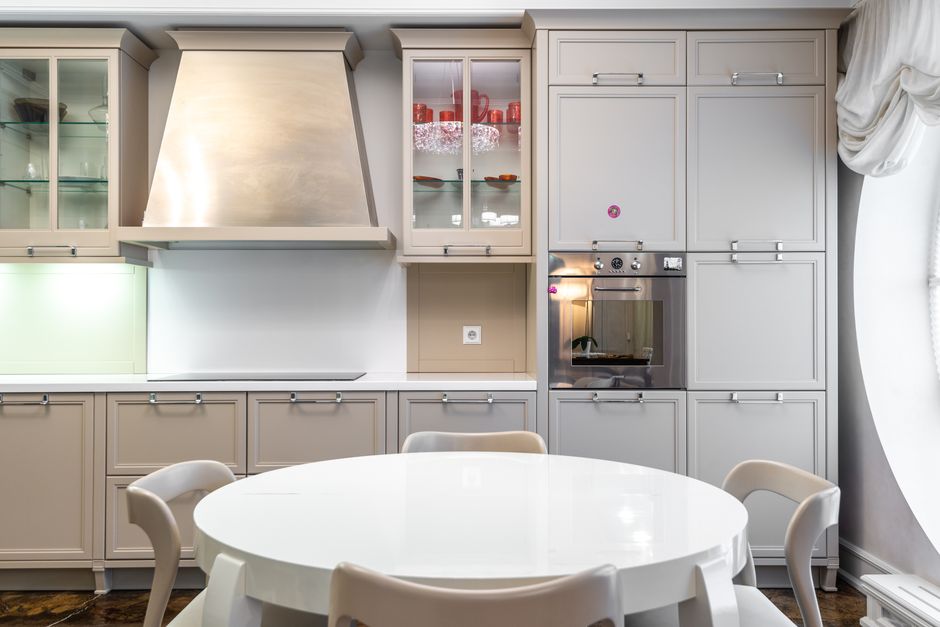
Choose quartz for low-maintenance daily use, granite for strong heat resistance if yearly sealing fits the routine, laminate for the lowest tested installed-price range when hot cookware stays on trivets, and butcher block for dry prep zones rather than the sink. Set the material by kitchen zone, then budget separately for edges, cutouts, removal, and plumbing work.
A countertop is not one decision. It is a set of work surfaces with different jobs: hot cookware near the range, wet work at the sink, chopping and spills at the prep area, and daily wear everywhere else.
| Material | Best fit | Heat rule | Upkeep | Source price range |
|---|---|---|---|---|
| Quartz | Busy homes seeking low upkeep | Use a trivet or hot pad | No sealing | $40-$100 per sq. ft. in Consumer Reports testing; $60-$230 installed in Good Housekeeping's guide |
| Granite | Frequent cooks who accept sealing | Resisted heat in testing | Seal yearly | $40-$100 per sq. ft. in Consumer Reports testing; $50-$130 installed in Good Housekeeping's guide |
| Laminate | Budget-led kitchens with controlled heat | Never set hot cookware directly on it | Soap, water, rinse, dry | $10-$40 per sq. ft. in Consumer Reports testing |
| Butcher block | Dry prep or island zones | Oil-finished wood resisted heat better than varnished wood | Monthly food-grade mineral oil | $40-$100 per sq. ft. in Consumer Reports testing; $30-$170 installed in Good Housekeeping's guide |
These ranges are not competing promises. They come from different guides and scopes. They show why a quote needs a line-by-line reading before a household treats a material price as the full project price.
Is quartz or granite better for a busy kitchen?
Quartz is the cleaner fit for a busy kitchen when the household wants the least maintenance; granite is the stronger fit when direct heat is common and yearly sealing is acceptable.
Consumer Reports tested 14 countertop materials by staining, slicing, scratching, scorching, and nicking them. Its summary found quartz more durable and lower-maintenance than natural stone. The same testing found granite resisted heat, cuts, and scratching, though corners and edges can chip and the stone needs periodic resealing.
Choose by the household's friction point. Frequent sauce spills, children, and little appetite for a care calendar point toward quartz. Heavy cooking with hot pans near the work surface points toward granite, with sealing treated as a recurring task rather than a surprise.
Quartz is low upkeep, not invulnerable. Cambria says impacts at edges near sinks and dishwashers can chip quartz, and direct cutting can leave scratch marks. Granite is hard-working stone, not a surface that forgets its care needs.
Can I put hot pans on quartz countertops?
No. Put hot pans on a trivet or hot pad, even when the quartz has strong stain and scratch resistance.
Cambria states that quartz is not heat-proof and warns against direct transfer of heat from pots, pans, griddles, slow cookers, air fryers, roaster ovens, and heat lamps. It also warns that rapid temperature changes and direct or sustained heat can damage stone surfaces.
This creates a simple kitchen rule: the pan does not travel from burner or oven to bare quartz. Place protection where hot cookware lands most often. A quartz choice still works for serious prep and spills; it only fails when heat protection is treated as optional.
Corian Quartz gives the same instruction: use trivets or pads for hot cookware and cutting boards for prep. Agreement across manufacturer care guidance makes the distinction plain. Heat resistance is not heat-proof.
Are modern laminate countertops durable enough for a family kitchen?
Yes, laminate is durable enough for a family kitchen when the household protects it from direct heat and avoids abrasive cleaning; it is a poor match for a counter that doubles as a landing pad for hot pans.
Wilsonart directs owners to clean laminate with mild soap or detergent, warm-water rinsing, and drying. Its care guide also says hot pans and heat-producing appliances placed directly on the surface can mar it. Cookware moved straight from an oven or burner can cause cracking or blistering.
The heat threshold is not abstract. Wilsonart's technical guidance says sustained temperatures around 285 F can discolor laminate, while contact adhesives can soften around 200 F. Use a heat shield, hot pad, or trivet every time. Keep steel wool, acidic cleaners, and abrasive cleaners out of the cleaning routine.
For a remodel budget, laminate starts with the lowest Consumer Reports tested installed-price range: $10 to $40 per square foot. That saving has a condition. The cooking routine must support the material.
Is butcher block safe and practical around a kitchen sink?
Butcher block is not the practical choice immediately around a kitchen sink, because water exposure and stain risk demand more care than the other options.
Consumer Reports found oil-finished butcher block resisted heat better than varnished wood, but stains spread and were impossible to remove in its testing. Its advice is direct: do not use it at a sink. Good Housekeeping also lists monthly food-grade mineral-oil treatment to help prevent cracking.
Wood still has a place. Use it on a dry island or a prep stretch away from the sink, where its care routine is visible and manageable. Keep the wet perimeter in quartz, granite, or another material chosen for that zone.
Cleanliness is a separate discipline from the countertop finish. The University of Illinois Extension says food-contact surfaces, countertops, and sinks should be regularly cleaned and sanitized to limit cross-contamination. Clean first with hot, soapy water, then sanitize; food particles and soils can deactivate bleach sanitizer.
Project costs also extend beyond the slab or sheet. Good Housekeeping says its countertop prices exclude edge treatments, estimated from $5 per linear foot for a standard square edge to $60 per linear foot for an ogee edge. Ask each installer to separate the material, edge treatment, cutouts, old-counter removal, and plumbing-related work. A low material number can conceal a larger installed number.
Frequently Asked Questions
Which countertop needs the least maintenance?
Quartz needs the least routine upkeep among these four choices. Cambria and Corian Quartz state that their quartz surfaces need no sealing, polishing, or reconditioning; routine cleaning uses a soft cloth, warm water, and mild cleaner when needed. Granite needs yearly sealing to remain stain-resistant, while butcher block needs monthly food-grade mineral oil.
Can I mix countertop materials on an island and perimeter counters?
Yes. A zone-based plan can put granite or quartz on perimeter work areas and use butcher block on a dry island prep area. The materials should follow the task: keep wood away from the sink, protect quartz and laminate from direct heat, and include each material's care routine in the plan.
What countertop material offers the best value for a kitchen remodel?
Laminate offers the lowest tested installed-price range in Consumer Reports' comparison, at $10 to $40 per square foot. Value changes when the kitchen sees frequent hot cookware, since laminate requires heat protection and direct heat can crack or blister it. Compare the installed material price with edge work, cutouts, removal, and plumbing before choosing.