
What Can I Do with the Narrow Space Between My House and Fence?
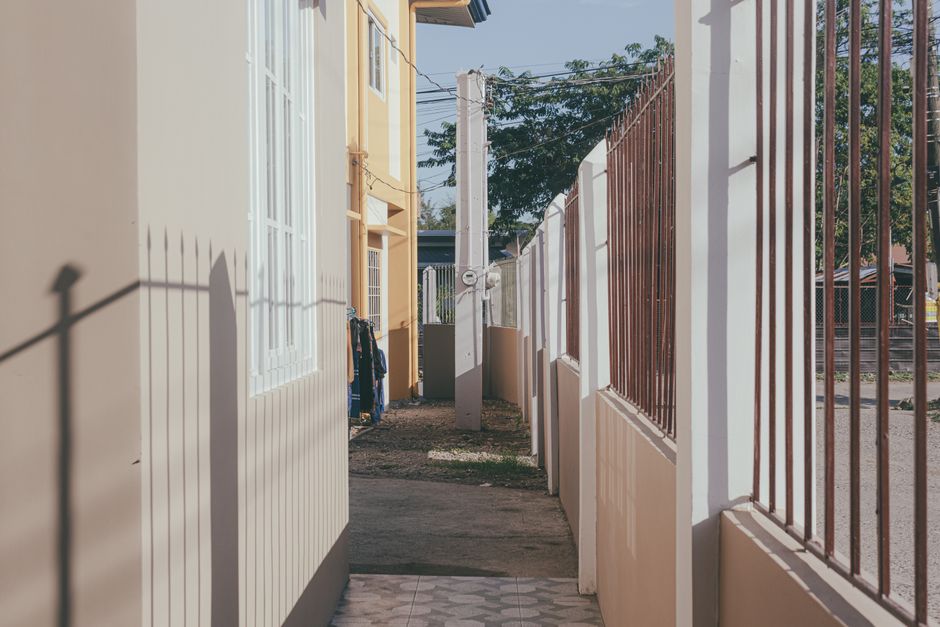
Turn the side yard into a clear, useful passage: choose a walkway that fits daily access, keep gates and utilities reachable, and guide water away from the house. Gravel, stepping stones, and pavers each suit different conditions. Add edging where loose materials need it, then choose plants for the actual light, moisture, and mature-space limits.
What can I do with the narrow space between my house and fence?
Use the narrow space as a serviceable garden passage, with a route for walking and access to anything that needs maintenance. Begin by marking doors, gates, utility boxes, air conditioners, and underground utilities. The Kansas State University Research and Extension landscape guide recommends putting these features on the plan before work begins.
A side yard is often a working strip before it is a planting bed. North Carolina State University Extension notes that side yards commonly hold utility meters, cable access, or air-conditioning equipment. Keep plants and screening clear of these features so access and airflow remain open.
Next, read the ground. Look for runoff paths, erosion, and spots that stay wet for several days. These clues matter more than a planting sketch: water needs to drain away from the structure, and downspout extensions can help prevent erosion around landscape plants, according to the Kansas State guide.
Then choose a surface to match the job. Gravel gives water a route into the ground but needs edging. Stepping stones create a broken path with open spaces between stones. Pavers give a more continuous walking surface; pervious pavers allow water to seep through. UF/IFAS Gardening Solutions lists gravel, stepping stones, mulch, porous concrete, and pervious pavers among permeable walkway options.
A narrow passage benefits from restraint. Keep the walking line legible, place planting pockets where they do not pinch access, and use plants whose mature size fits the remaining width. A path that leaves room for a gate to swing and a meter to be reached is more useful than a fuller-looking bed.
How wide should a side-yard walkway be?
Set the width according to how the path will be used: a route for one person can be narrower than a shared entrance, while a connecting path needs enough room for comfortable passage. North Carolina State University Extension gives a range of 1–2.5 feet for paths intended for one person, 2.5–3 feet for connecting paths, and 4.5–5 feet for a main entrance used by two people.
UF/IFAS says walkways intended for more than one person should be at least 3 feet wide. These recommendations address different uses: three feet is a minimum for a path shared by more than one person, while the wider 4.5–5-foot range is for a main entrance accommodating two people.
Measure the clear walking width, not just the space between house and fence. A projecting air conditioner, open gate, downspout, or mature plant can take away usable room. Mark those obstacles before deciding how much of the passage can become a path.
| Path use | Width guidance | Planning note |
|---|---|---|
| One person | 1–2.5 feet | Keep the route clear of plants and equipment. |
| Connecting path | 2.5–3 feet | Useful for moving between parts of the property. |
| More than one person | At least 3 feet | UF/IFAS guidance for shared walkways. |
| Main entrance for two people | 4.5–5 feet | North Carolina State Extension’s guidance for a two-person entrance. |
Width is only part of a durable path. For solid surfaces, Kansas State recommends a 1–2% grade to reduce standing water. UF/IFAS describes a slight 2% cross-slope for drainage. The shared point is practical: give water a planned way to move, rather than letting it pool beside the foundation.
Can I use gravel and stepping stones in a shaded side yard?
Yes. Gravel and stepping stones can suit a shaded side yard when the ground is prepared for drainage and the route fits how people use it. UF/IFAS notes that both materials allow water to seep into the ground; it also recommends edging loose gravel so it does not wander beyond the path.
Stepping stones work when a broken walking line is acceptable. Set each stone level, and leave spaces between stones for water flow, as UF/IFAS advises. Gravel provides a more continuous loose surface, but it needs a firm boundary and a route that will not be undermined by runoff.
Shade does not tell you how much water a planting bed receives. House overhangs can block rain, while tree roots compete for moisture. Utah State University Extension explains that dry shade can arise from these conditions and warns that shade-tolerant plants are not automatically drought-tolerant.
Match plants to the site before choosing by appearance. Utah State’s dry-shade list includes lady’s mantle, which grows about 1–1.5 feet tall and 1.5–2.5 feet wide, and columbine, generally about 2 feet tall and 1 foot wide. Those dimensions help with spacing, but the university’s listed hardiness zones reflect Utah-region conditions, not every garden. Check local suitability and leave room for mature growth.
Lighting should mark the path without crowding it or spilling broadly into the yard. The U.S. National Park Service recommends lighting only where needed, directing light onto the task area, and using the lowest output that serves the task. Fully shielded fixtures send light downward; timers, motion detectors, or dimmers can limit when lights run. Avoid exposed bulbs and globes that can cause glare and send light upward.
The simplest plan is often the strongest: a measured path, open access to utilities, water directed away from the house, and a few plants suited to the actual shade and moisture. A side yard becomes useful when each part has room to do its job.
Frequently Asked Questions
How do I keep gravel from washing away along a side path?
Use edging to keep gravel from spreading, as UF/IFAS recommends for loose path materials. Check where water flows before laying the path, keep drainage moving away from the house, and avoid directing runoff across the gravel.
What plants can handle the shade and limited space beside a house?
Choose plants by the site’s actual light, soil moisture, and available mature width. Utah State University Extension identifies lady’s mantle and columbine among plants for dry shade, but its hardiness guidance reflects Utah-region conditions and should not be treated as universal.
Sources
How Can I Refresh My Backyard Without a Full Remodel?
Refresh your backyard in stages with practical weekend projects, restrained color, containers, lighting, and seating—without replacing the patio.

How Do I Choose Gravel for a Modern, Easy-to-Maintain Driveway?
Choose gravel, edging, and grids for a modern driveway that stays stable, drains well, and is easier to maintain.